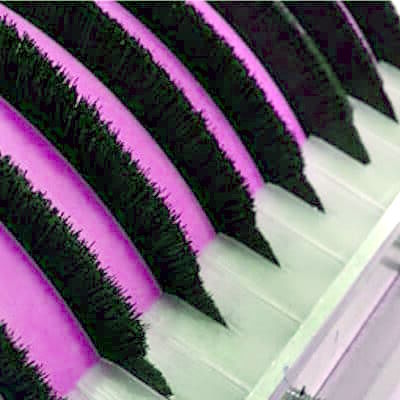
Various methods are used to increase the cross-sectional area and better absorb oil from water. There are two main methods: the use of multiple discs and the use of slip rings.
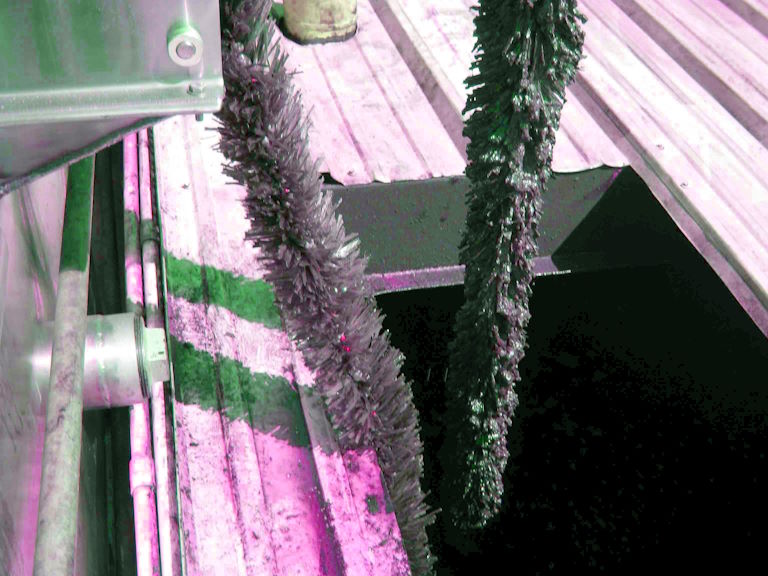
Benefits of replacing an oil separator
- More efficient than rope sliders
Disadvantages of scraper exchange
- Requires more care and supervision.
- Failure and a short life
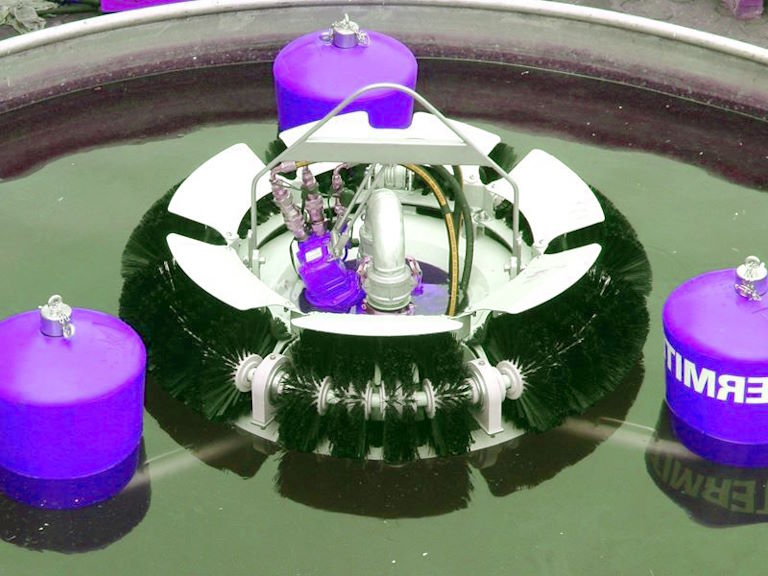
It represents
Lubricants and oils are the main contaminants of wastewater and industrial fluids in a wide variety of industries, from mechanical engineering and metal parts manufacturing to petrochemical and food processing. In addition to deteriorating fluid quality, the presence of these contaminants can lead to reduced equipment efficiency, increased maintenance costs, and serious environmental threats .
To solve this problem, a device called an oil separator has been developed, which collects oil from the surface of water or industrial liquids, providing a cleaner liquid that can be reused. Among the different types of oil separators, brushed separators are one of the most effective and professional solutions for the collection of heavy, highly viscous oils.
In this article, we aim to provide comprehensive information about the Bersey oil separator, including how it works, benefits, applications, and key points when choosing.
What is Skimmer Review?
A brush skimmer is a device that uses special brushes to collect oil from the surface of a liquid. These brushes are usually made of durable, corrosion-resistant materials and provide maximum adhesion of oil to the surface.
As the brush moves over the surface of the liquid, grease sticks to the lint. The brush then passes over a system of blades or skimmers that collect the oil and transfer it to a special container. This simple but highly efficient process collects viscous (sticky and dense) oil that other types of skimmers, such as disc skimmers or bucket skimmers, do not always catch.
How do oil separators work?
The mechanism of the device can be described in three stages:
-
Brush contact with liquid surface: The brush rotates on the surface of water or wastewater and absorbs a layer of grease.
-
Oil transfer to the separation system: As the brush continues to rotate, the oil stuck to it enters the scraper section or separation blade.
-
Collection into tanks: The separated oil is continuously collected in tanks or containers and can be used for recovery or optimal disposal.
This process is completely mechanical and does not require the use of chemicals or significant energy consumption.
Benefits of Checking a Skimmer
The use of a brushed oil separator offers significant advantages over other models:
-
Large Heavy Oil Collection Capacity: Suitable for viscous oils such as grease, waste oil, or thick industrial oil.
-
Works effectively in dirty environments: the performance of the device does not decrease even in the presence of solid particles, metal chips or foam.
-
STRONG & DURABLE: The brushes are made of durable materials (synthetic nylon, stainless steel, or specialty polymers) that can be washed and used for a long time.
-
Reduced disposal and maintenance costs: Removing grease before it enters the cleaning system reduces the strain on filters and pumps.
-
Eco-friendly: Prevents oil from entering water and soil, helping to protect the environment.
-
Oil Recovery: The collected oil can be stored and refined.
Oil Separation Applications
Brushed oil separators are widely used in various industries due to their unique design and high absorption capacity. Their most important applications are:
-
Production and conversion shops: degreasing of coolant tanks and extension of the service life of the cutting fluid.
-
Petrochemical and petroleum industry: Collecting heavy oil from storage tanks or leaks to the ground.
-
Industrial refineries: reducing oil pollution in the early stages of refining.
-
Small production plants: Prevents unpleasant odours and bacterial growth due to contaminated liquids.
-
Food industry: separation of fats from wastewater from the production of edible oils or the dairy industry.
-
Marine and port environment: Oil or grease stains accumulate on the surface of the water.
Comparison of Bersey oil separators with other models
To help you make the best choice, we have made a brief comparison of brushed oil separators with disc and drum oil separators:
| peculiarity | Pass the exam | disk | bucket |
|---|---|---|---|
| Suitable for light oil. | Half | excellent | excellent |
| Suitable for heavy and viscous oils. | excellent | weak | Half |
| Efficiency in the presence of solids | excellent | weak | Half |
| Maintenance costs | Half | less | Half |
| High volumetric efficiency | excellent | Да | excellent |
According to the table, if the oil in the system is heavy, thick or contains solids , then a brush scraper is the best choice.
Important Considerations When Choosing an Oil Separator
In order to optimally purchase and use this device, there are a few key points to consider:
-
Size of contaminated surface: The capacity of the equipment should be selected according to the size of the tank or pool.
-
Oil type: For light oils, you can use a disc or bucket, but for heavier oils, a brush is the best option.
-
Environmental conditions: Temperature , foam or the presence of suspended solids can affect brush selection and equipment design.
-
Brush quality: High-quality brushes extend the life of the machine and improve cleaning efficiency.
-
Maintenance and repair costs: Equipment with a simple structure and washable parts has lower maintenance costs.
Operation and maintenance of Eriez 83-1000E and 83-2000E crushers
Finally
Brushed oil separators are a professional and efficient solution for collecting heavy and viscous oils as well as surface contaminants from industrial fluids. With their robust brushes, these units are ideal for working in contaminated environments and are a cost-effective and environmentally friendly option due to their high absorption capacity and high oil recovery efficiency.
Compared to other models, brush scrapers are ideal for handling thick and viscous petroleum products in wastewater or storage tanks. Therefore, industries such as petroleum, petrochemical, metallurgy, and food processing use this technology to increase productivity, reduce costs, and protect the environment.
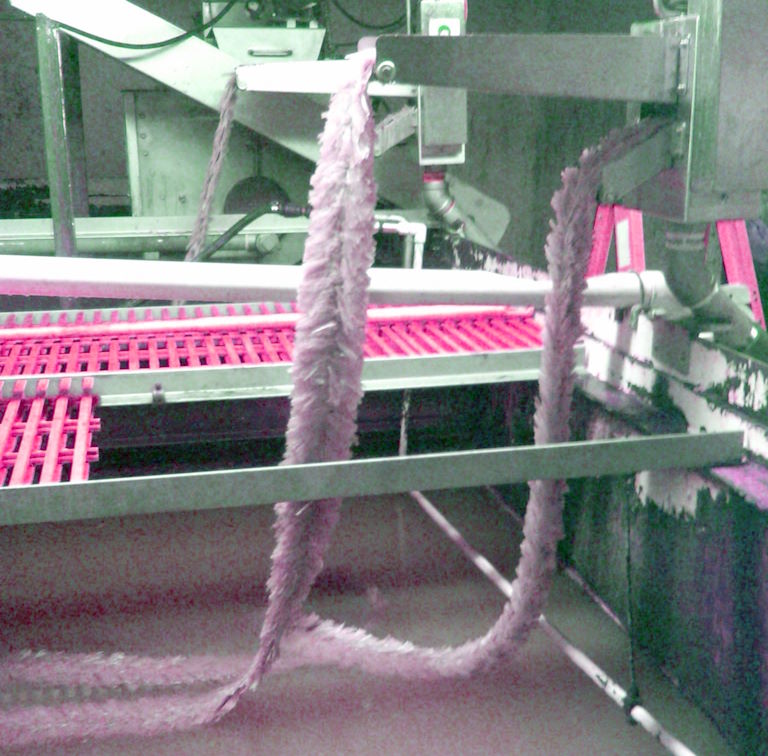
Oil spills cause significant damage to the environment, affecting aquatic life for many years. Wildlife, fragile ecosystems and coastlines, including mangroves and wetlands, can suffer for decades. Therefore, oil companies have an environmental and ethical responsibility to prevent oil spills as soon as possible. The longer the response time, the greater the damage. but also reduces the company’s costs.
Fortunately, there are many innovative products on the market that can effectively and quickly prevent oil spills. In this article, we will explain these innovative products. How to control oil spills? Read on and become an expert.

Current NOFI destroyer
The internationally patented NOFI Current Buster system represents a revolution in oil spill response technology. It is capable of collecting, containing and separating oil spills from seawater at a suction rate of up to five knots . This system is so fast and efficient that it has even been used during disasters such as the Deepwater Horizon oil rig accident in the Gulf of Mexico in 2010.
Hanging Bag System
The tarpaulin bag system is very practical and allows for quick spill clean-up. The bags can be stored on the dock for immediate use or in a warehouse, and then quickly transported to the spill site using a forklift or trailer.
Another advantage of bag barrier systems is that they require a minimum number of vessels and personnel to use, making them very cost-effective.
This type of system is well suited for situations that require quick recovery.
Inflatable Tarpaulin
Made of high-strength materials such as polyvinyl chloride (PVC), they are designed to prevent the spread of oil and other contaminants by forming a barrier around the affected area. They also have excellent buoyancy and wave-following ability, making them extremely resistant even in harsh conditions.
Oil-absorbent fabric
Oil-absorbent tarpaulin is highly absorbent and tear-resistant. It is made of vegetable fibers/cotton and polypropylene.
Oil absorber cranes require fewer resources than fully assembled cranes. They can also be used to seal leaks between mechanical cranes, docks, wharves, ships, etc.
Oil booms are commonly used as emergency response equipment. In the event of an oil spill at a quayside, both small and large booms can be used to prevent oil from entering the water.
Lifting tanks
These portable tanks have a capacity of 75 to 575 liters and 2000 to 10,000 liters. They are resistant to most acids, alkalis, oils and chemicals, as well as to ultraviolet radiation, corrosion and punctures.